

Good wardrobe design for small bedroom spaces comes down to three decisions: run the wardrobe to full height with a loft so it stores more without taking extra floor, pick sliding or hinged shutters based on the clear space in front of it, and plan the inside around what you actually own. Get those right and a compact Bangalore bedroom can hold two people’s clothes without feeling crowded.
This guide is for anyone fitting out a 10 x 10 or 10 x 11 foot bedroom in a city apartment, often the second bedroom in a 2 BHK, who wants the wardrobe to work hard without taking over the room.
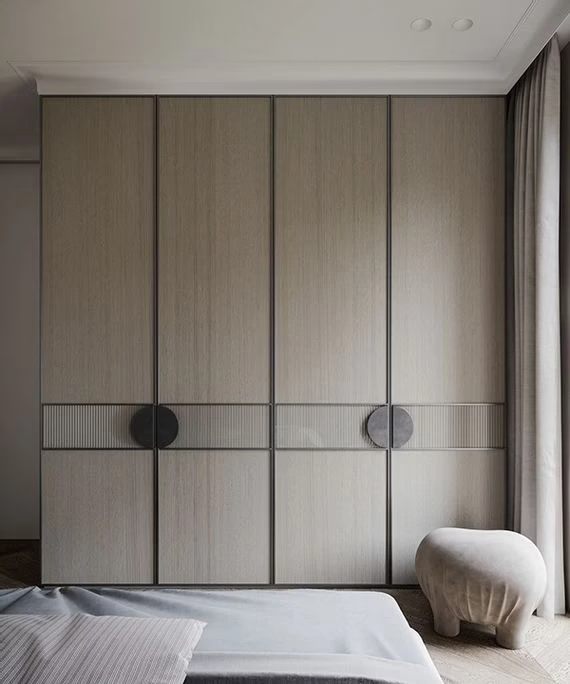
Where should the wardrobe go in a small bedroom?
Put the wardrobe on the longest unbroken wall that is not behind the bed head or across a window, and check the door swing before anything else. In most apartment bedrooms that is the wall beside the entry door or the wall opposite the bed. Avoid walls with a structural beam or column you would have to cut around, and keep the wardrobe clear of the AC unit and any switchboards you need to reach. If the only free wall faces the foot of the bed, measure the gap between the bed and the wardrobe carefully, because that gap decides which shutters will work.
Sliding or hinged: which wardrobe suits a small bedroom?
A sliding wardrobe design suits a small bedroom when there is less than about 2 to 2.5 feet of clear floor in front of the wardrobe, because the shutters never swing into the room. A hinged wardrobe suits rooms where you can open the doors fully, and it gives you access to the whole interior at once, which sliding doors cannot. Neither is better in every room; the clearance in front of the unit usually decides it.
| Question | Sliding wardrobe | Hinged wardrobe |
|---|---|---|
| Space needed in front | Minimal, shutters stay in line | Room for the door to swing fully open |
| Access to the inside | About half the wardrobe open at a time | Whole wardrobe open at once |
| Depth required | Slightly deeper to fit the track | Standard depth works |
| Upkeep | Tracks need occasional cleaning and alignment | Hinges need occasional adjustment |
| Best for | Tight rooms, beds close to the wardrobe | Rooms with clear floor, frequent full access |
How deep and tall should a small bedroom wardrobe be?
Most built-in wardrobes are about 2 feet (roughly 600 mm) deep, which lets hangers sit across the unit without the clothes brushing the doors. Sliding wardrobes usually need a little more depth to fit the track. In a very tight room you can go shallower, but below roughly 550 mm hangers no longer fit across and you have to switch to pull-out rails or shelves. Height is where a small bedroom gains the most: running the wardrobe to the ceiling with a loft above the main shutters adds storage for suitcases, spare bedding and seasonal clothes without using a single extra inch of floor.
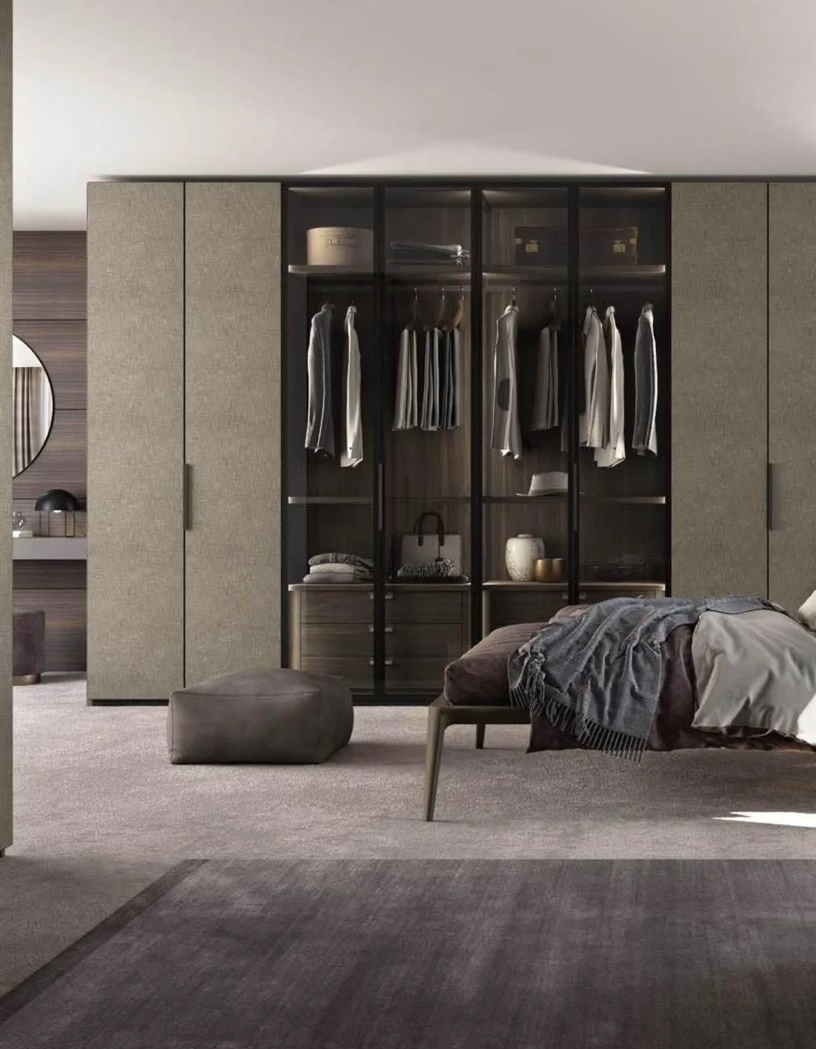
What should go inside a wardrobe for a small bedroom?
Plan the inside around your clothes, not around a standard template. A quick count of what you hang, what you fold and what you keep in drawers tells you how to split the space. A few layouts work well in compact rooms:
- Two hanging levels. Shirts and trousers take up half the height of a long dress, so double hanging rails in one section can nearly double capacity.
- One long-hanging bay. Keep a single full-height section for sarees on hangers, dresses and coats.
- Internal drawers. Drawers inside the wardrobe replace a separate chest of drawers, freeing floor space in the room.
- Pull-out accessories. Trouser racks, tie and belt pull-outs, and a small locker make use of narrow sections that would otherwise be dead space.
- Loft for the rarely used. Luggage, winter clothes and spare linen go up high so the everyday zone stays clear.
Which shutter finishes make a small room feel bigger?
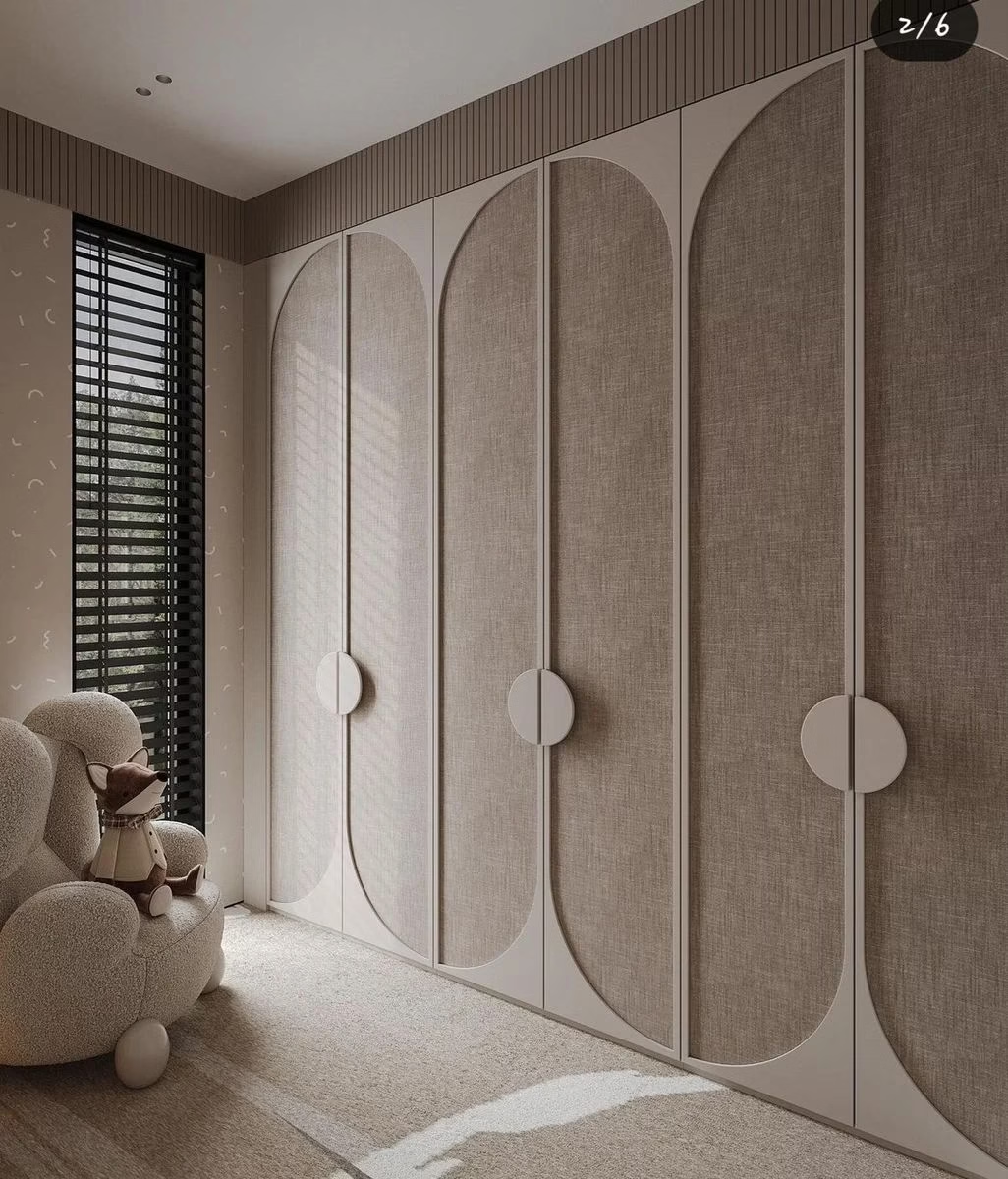
Light, low-contrast finishes let a full-height wardrobe read as part of the wall instead of a block of furniture. Soft whites, beiges and pale greys in matte laminate are hard-wearing and budget-friendly. A mirrored or glass-profile panel on one shutter reflects light and makes the room feel deeper, and it can replace a separate dressing mirror. Handle-less designs, with profile handles or push-to-open fittings, keep the surface calm and avoid knocks in a tight room. Acrylic gives a glossier look but shows fingerprints and scratches more; many homes keep acrylic to one feature section. Our wardrobe designs show these finishes on real projects.
What materials hold up in a Bangalore bedroom wardrobe?
The part that matters most is the carcass, the box behind the shutters that carries the weight of your clothes for years. A quality plywood core holds screws and hinges far better than particle board or low-grade MDF, which can sag under load and swell in the monsoon, especially on walls shared with a bathroom. Edge-banding on every exposed edge keeps moisture out. As a studio, we do not use engineered wood or low-quality MDF for wardrobe carcasses. Soft-close hinges or good sliding channels are worth paying for, because they are the parts you use every day.
What are common mistakes in wardrobe design for small bedroom spaces?
A few mistakes come up again and again in compact rooms:
- stopping the wardrobe short of the ceiling, which leaves a dust shelf instead of a loft
- choosing hinged doors that hit the bed or the room door when opened
- filling the whole interior with shelves, then finding nowhere to hang clothes
- dark, high-contrast shutters that make the wardrobe dominate the room
- forgetting lighting inside, so the back of a deep wardrobe stays dark
How The Aangan Story designs wardrobes for compact bedrooms
We measure the room, the door swing and the gap to the bed first, then ask what you own and how you dress in the morning. The wardrobe is drawn in 3D so you can see how it sits in the room before anything is made, and the estimate is itemised in INR with the core material, the finish and the hardware named for each section. If the wardrobe is part of a larger fit-out, our guide to interior design cost in Bangalore shows where wardrobes sit in the overall budget, and our bedroom designs show how wardrobes, beds and lighting work together.
Frequently asked questions
Which wardrobe is best for a small bedroom?
A full-height built-in wardrobe with a loft usually stores the most in a small bedroom. Choose sliding shutters if there is little clear space in front, and hinged shutters if the doors can open fully.
What is the standard depth of a wardrobe?
Most built-in wardrobes are about 2 feet (roughly 600 mm) deep so hangers fit across the unit. Sliding wardrobes need a little more for the track, and anything much shallower than about 550 mm needs pull-out rails instead.
Is a sliding wardrobe good for a 10×10 bedroom?
Often, yes. In a 10 x 10 foot room the bed usually leaves only a narrow gap in front of the wardrobe, and sliding shutters need no swing space. The trade-off is that you can open only part of the wardrobe at a time.
How can I make a wardrobe look less bulky in a small room?
Take it to the ceiling so it reads as a wall, use light matte finishes close to the wall colour, add a mirrored or glass-profile panel, and choose handle-less or profile-handle shutters.
Should a small bedroom wardrobe have a loft?
Yes, in most apartments. A loft above the main shutters uses height that would otherwise be wasted and keeps luggage, spare bedding and seasonal clothes out of the everyday storage zone.
The right wardrobe design for small bedroom spaces starts with your room’s measurements and what you own. Book Free Consultation and we will plan one that fits, itemised in INR.
Written by The Aangan Story Design Team, a design-led interior studio based in Whitefield, Bangalore, with a second studio in Kolkata.